Important data released
On the evening of June 25th, Beijing time, data released by the U.S. Bureau of Economic Analysis showed that the personal consumption expenditures (PCE) price index rose 4.1% year-on-year in May, the highest level since April 2023; the core PCE (excluding food and energy) rose 3.4% year-on-year, in line with expectations, with the previous value revised down from 3.3% to 3.29%, and the month-on-month increase accelerating from 0.2% to 0.3%.
Following the data release, U.S. short-term interest rate futures rose as traders reduced their bets on a Federal Reserve rate hike. This also boosted futures for the three major U.S. stock indices. As of 8:50 PM, Nasdaq 100 futures were up 2.37%, S&P 500 futures were up 0.81%, and Dow Jones futures were up 0.32%. Precious metals also rose across the board, with spot silver up 1.57% and spot gold up 0.53%.
Some analysts believe that the rise in the overall US PCE data in May was mainly due to the impact of the US-Iran conflict pushing up international oil prices. However, the simultaneous strengthening of core PCE indicates that upward pressure on prices is not solely caused by short-term energy disturbances. If, after a significant drop in international oil prices, the US core inflation data does not show signs of slowing down in the next two months, the Federal Reserve may assess the option of raising interest rates at its September policy meeting.
It should be noted that the core PCE is a key inflation measure that the Federal Reserve refers to when formulating monetary policy. Its continued high level above the Fed's 2% target range will constrain expectations of interest rate cuts.
Despite rising prices, real consumer spending still increased by 0.3% quarter-on-quarter, reflecting that American household spending power has not been significantly eroded. Other data shows that the annualized GDP growth rate for the first quarter of 2026 in the United States has been revised upward to 2.1%, further confirming the continued expansion of the overall US economy.
The simultaneous rise in consumer spending and inflation indicates that nominal demand remains strong, which to some extent supports businesses' pricing power, but also makes it more difficult for inflation to fall further.
Previously, Warsh's hawkish signals were reshaping Wall Street institutions' assessments of the path of US interest rates. Bank of America, Barclays, Goldman Sachs, Deutsche Bank, and other institutions have successively revised their forecasts, betting that the Federal Reserve will resume rate hikes as early as September this year.
BofA Global Research is currently the most aggressive interest rate hike forecaster among major global institutions. The bank predicts the Federal Reserve will raise interest rates by 25 basis points each in September, October, and December, for a total of 75 basis points for the year.
Deutsche Bank predicts that the Federal Reserve will raise interest rates twice this year, by 25 basis points each in September and December, for a total of 50 basis points for the year.
Barclays interest rate strategists advise clients to position themselves for higher U.S. Treasury yields and have raised their target yields on U.S. Treasuries across all maturities by about 35 basis points.
Economists at the bank had previously predicted a Federal Reserve rate cut in 2027, but now believe the policy rate will remain unchanged.
Lindsay Rosner, head of diversified sector investment at Goldman Sachs' asset and wealth management division, recently warned that there is a "high probability" of a Federal Reserve rate hike in July, with a 50% chance. She pointed out that upcoming inflation data, particularly the personal consumption expenditures report, is a key factor that could prompt the Fed to take action.
In their latest report, senior analyst Kirstine Kundby-Nielsen and chief analyst Jens Peter Sorensen of Danske Bank stated that they expect the Federal Reserve to raise interest rates twice, in December 2026 and March 2027, bringing the federal funds rate to 4.00%–4.25%.
They also warned that there is a risk that interest rate hikes may come sooner than expected, and that there may be more than two rate hikes.
Although the Federal Reserve kept the benchmark interest rate unchanged at its June policy meeting, nearly half of the Fed officials indicated in the dot plot that they expect interest rates to rise this year, with the continued strength of the labor market and high inflationary pressures being the core factors supporting the "hawkish" stance.
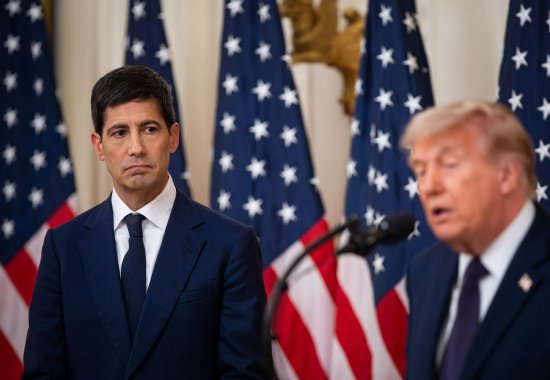
US Treasury Secretary Bessant released a significant signal on June 24th (Eastern Time), stating that he believes Federal Reserve Chairman Kevin Warsh will take the "best path" to achieve the Fed's two major mandates—reducing inflation and maintaining a strong labor market.
In an interview that day, Bessant also brought up an incident from early 1997, when former Federal Reserve Chairman Alan Greenspan spearheaded a "light-brake" rate hike that did not slow down the pace of economic expansion. A year and a half after that rate hike, the Federal Reserve implemented three consecutive rate cuts.
Some analysts believe that Bessant's remarks suggest that the current economic situation may require a similar gradual interest rate adjustment. Given the current economic climate, the Federal Reserve might be able to implement a small rate hike without needing to continue raising rates.
Neil Dutta, head of economic research at Renaissance Macro Research, interpreted Bessant's latest statement as tantamount to giving Warsh the "green light" to raise interest rates.
Neil Dutta predicts that the Federal Reserve will raise interest rates in September of this year.
Bessant predicts that U.S. consumer price increases are likely to slow as U.S. and Iranian negotiators work to end the war with Iran.
However, Torsten Slöck, chief economist at Apollo Global Management, said that falling international oil prices do not necessarily mean cooling inflation. In his latest report, Slöck wrote that the market narrative is shifting from "falling oil prices mean falling inflation" to "falling oil prices mean increased oil demand in the current overheated economic environment, which in turn will push up inflation."