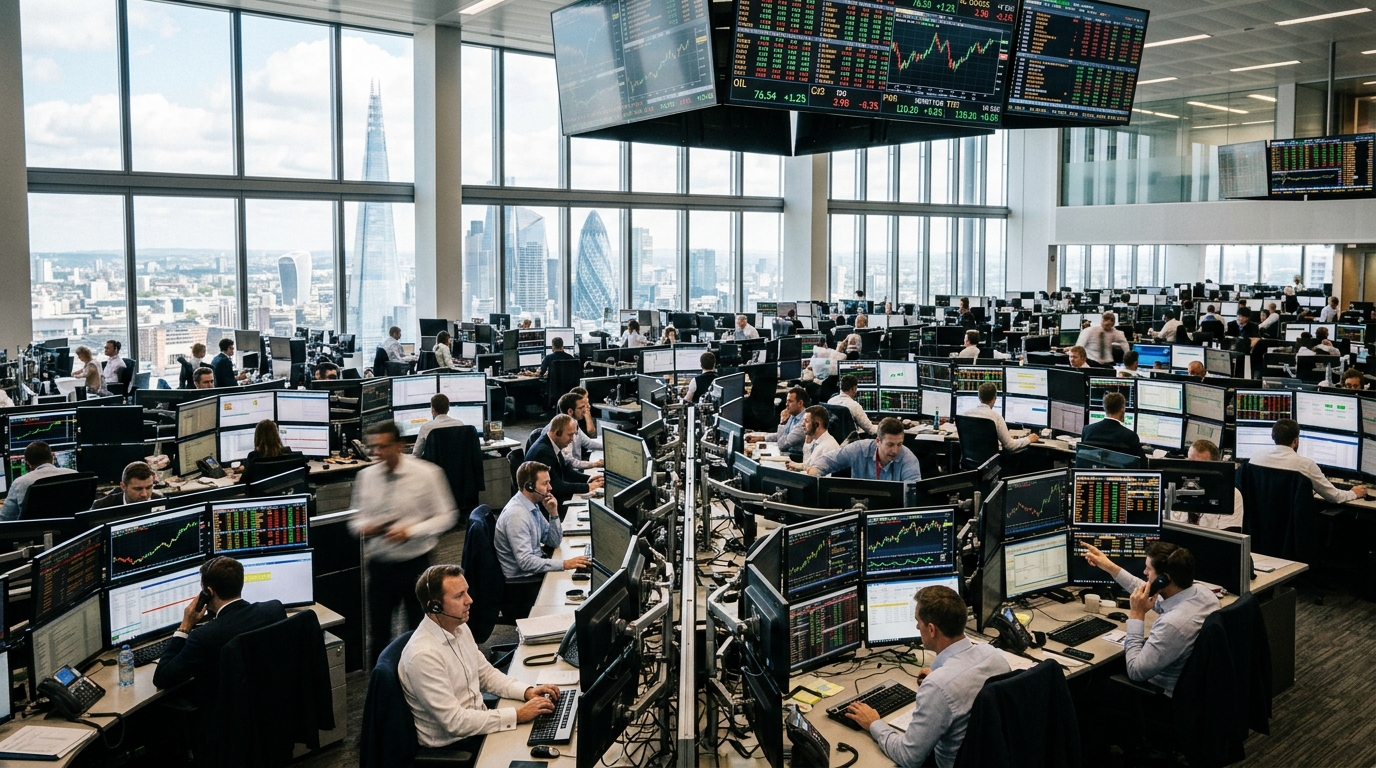
The Real-Time Pulse of a Sector That Never Sleeps
Energy and utilities don't trade in a vacuum. They move on weather forecasts, geopolitical headlines, grid demand spikes, and commodity swings that can turn a quiet morning into a volatile afternoon. Market Talk is the running commentary that captures those moments—the chatter from trading desks, the quick takes from sector analysts, the early reads on earnings beats or misses, the whispers about regulatory shifts before they hit the wire.
This isn't a retrospective. It's the live feed: what's catching attention in real time, which names are seeing unusual volume, where sentiment is shifting, and why a utility stock that barely budged for months is suddenly on everyone's screen. For traders and portfolio managers who need to know what's happening before it's old news, Market Talk is the pulse check.
The format is deliberately lean. No lengthy reports. No multi-page theses. Just the headline, the number, the context, and the implication—delivered in the time it takes to finish your coffee. Because in a sector where a pipeline approval or a natural gas inventory print can swing positions in minutes, speed and clarity beat depth every time.
Why Energy and Utilities Demand a Different Lens
Energy stocks trade on fundamentals that most other sectors don't: crude inventories, refining margins, LNG export capacity, electricity demand curves, weather patterns that dictate heating and cooling loads. Utilities, meanwhile, are rate-regulated quasi-monopolies with earnings visibility measured in decades—until they're not, because a wildfire, a grid failure, or a regulatory rebuke erases billions in market cap overnight.
The juxtaposition makes the sector fascinating and maddening in equal measure. An oil major can report record cash flow and still trade down because traders expected a bigger buyback. A utility can guide in line and rally because the dividend is safe and rates are falling. The macro backdrop—interest rates, commodity prices, policy—matters more here than in almost any other corner of the market.
Market Talk captures that complexity in real time. It's the place where you see the interplay: natural gas futures spiking on a cold snap, renewable energy stocks sliding on tariff chatter, integrated utilities rallying on a dovish Fed comment, midstream names getting bid as crude inventory draws tighten spreads. The sector doesn't move in lockstep, and the commentary reflects that.
What You Actually Get in a Market Talk Roundup
Each entry is a snapshot: a headline observation, a data point, a quick synthesis of what it means for a specific name or the broader sector. One might flag unusual call option activity in a major oil producer ahead of earnings. Another might note a utility's management commentary on a conference call that suggests capex guidance is coming down. A third might highlight a regulatory filing that signals a rate case is moving faster than expected.
The value isn't in any single item—it's in the aggregate. Read five or six entries and you get a sense of where the sector's attention is focused that day: Are traders worried about demand destruction? Is there a rotation into defensive utilities? Are midstream names finally getting credit for their cash flow stability? The roundup is a mosaic, and the pattern that emerges tells you what matters right now.
There's no pretense of being exhaustive. Market Talk doesn't try to cover every name or every move. It's curated for relevance: the signals that carry information, the moves that might be early indicators of a larger shift, the comments that contradict consensus and deserve a second look. If it's in the roundup, someone thinks it's worth your time.
Who Relies on This and Why
Active traders use it to spot intraday opportunities—a name moving on no news might have a catalyst buried in a conference call transcript or a newswire item that hasn't been widely picked up yet. Portfolio managers use it as a gut check: Is the thesis on that utility holding still intact after this morning's management comments? Should I be paying more attention to refining margins this quarter?
Analysts and strategists use it to stay current between their own deep dives. You can't read every 10-Q or listen to every call, but you can scan Market Talk in five minutes and know if something in your coverage universe just became urgent. Even long-only fundamental investors, who aren't chasing intraday moves, benefit from the real-time sentiment read—knowing what the market is focused on helps you separate noise from signal when your own positions move.
The common thread: everyone using Market Talk is trying to stay ahead of the curve, not catch up to it. In a sector where information advantages are measured in minutes, not days, that real-time edge is the product.
FAQ
How often is Market Talk updated?
Continuously throughout the trading session. Entries are added in real time as events unfold—earnings releases, economic data prints, management comments, unusual trading activity, regulatory filings. The roundup is a living document during market hours, not a once-a-day summary.
Is this just newswire headlines repackaged?
No. Market Talk is commentary and context, not wire stories. It synthesizes what's moving, why it matters, and what the immediate implication is—often before the broader market catches on. Think of it as the insight layer on top of the raw news flow.
Do I need to be a professional trader to get value from this?
Not at all. If you own energy or utility stocks, follow the sector closely, or just want to understand what's driving moves in real time, Market Talk is accessible and actionable. The format is built for speed, not jargon.
What if I miss a day—can I go back and review past commentary?
Yes. Roundups are archived and searchable, so you can see what the market was focused on during a specific period, track how sentiment evolved on a particular name, or review the signal that preceded a major move. It's a historical record as much as a real-time tool.
This content is for informational purposes only and does not constitute investment advice, a recommendation, or an offer to buy or sell any security. Past performance is not indicative of future results. All investments carry risk, including potential loss of principal. Consult a qualified financial advisor before making investment decisions.